Wood Floor Refinishing, Repair and Installation in Broomfield

We find out why a floor gapped, cupped or wore thin before we quote the fix, and we lay new hardwood only once the house is ready for it.

Broomfield Wood Flooring has spent more than 20 years on wood floors, and in Broomfield, CO we refinish, repair and install hardwood in detached houses, townhomes and condominiums across the city. We sand and refinish worn floors, repair and replace water-damaged boards, lay new solid and engineered wood where carpet used to be, and rebuild staircases one tread at a time.

Most calls start with a problem rather than a plan: a gap that opened in January, a board that cupped after a leak, oak that has gone orange, a squeak that follows you down the hall. We find out why it happened before we quote a fix, because the cause decides whether the answer is a repair, a refinish or new wood.

When the answer is new flooring, we start with the house itself. The subfloor, the moisture in each room, how the basement floor was built and how the new floor will meet the stairs all shape the right product, and we walk through them with you before anything is ordered.

Get Your Free Quote

Fast response • No obligation

So we can reach you about your request.

So we can send you a confirmation after you submit this inquiry form.

  • 20+ Years on Wood Floors
  • Moisture Readings Before Repairs
  • Stain Samples on Your Own Floor

What we do

Our Services

Wood floor refinishing, repair and installation in Broomfield, CO

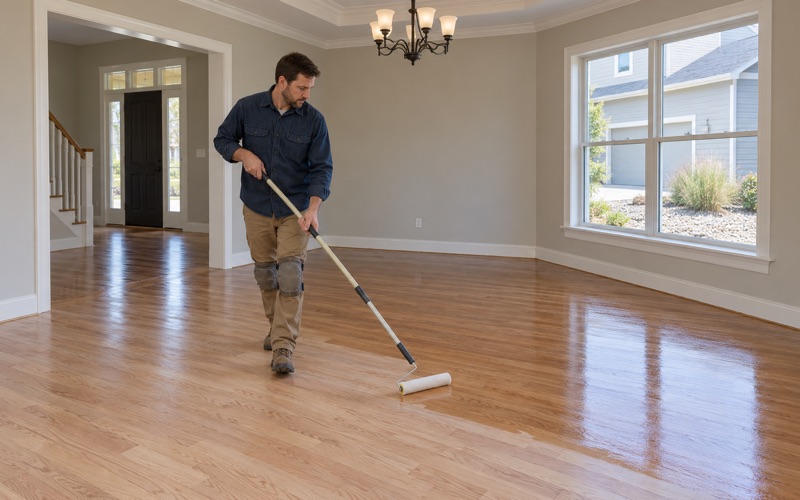
Worker walking backwards while rolling clear finish across sanded oak in the dining room of a Broomfield house.

Wood Floor Refinishing

Sanding to bare wood, stain matched on your own boards and a finish picked for your household, with the floor checked for sanding life first.

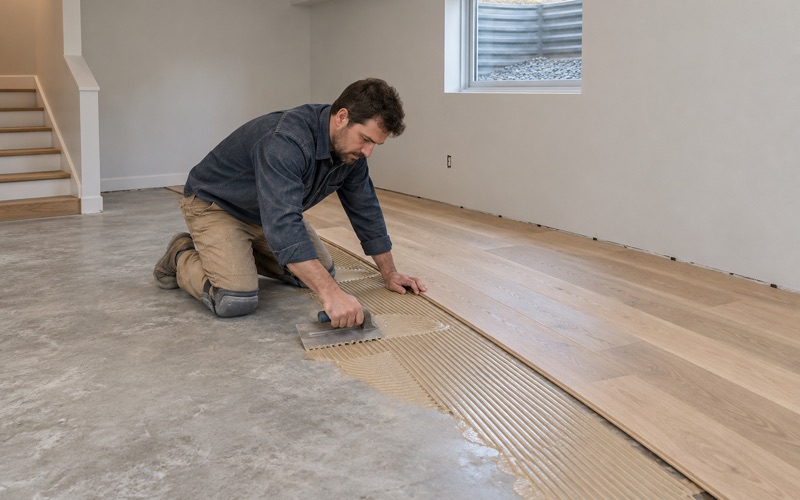
Worker troweling adhesive onto the concrete floor of a finished basement for engineered hardwood in a Broomfield home.

Engineered Hardwood Flooring

Real wood over a stable core, chosen for basements, slabs and dry Colorado winters, and installed glue-down, floating or nailed to suit the floor below.

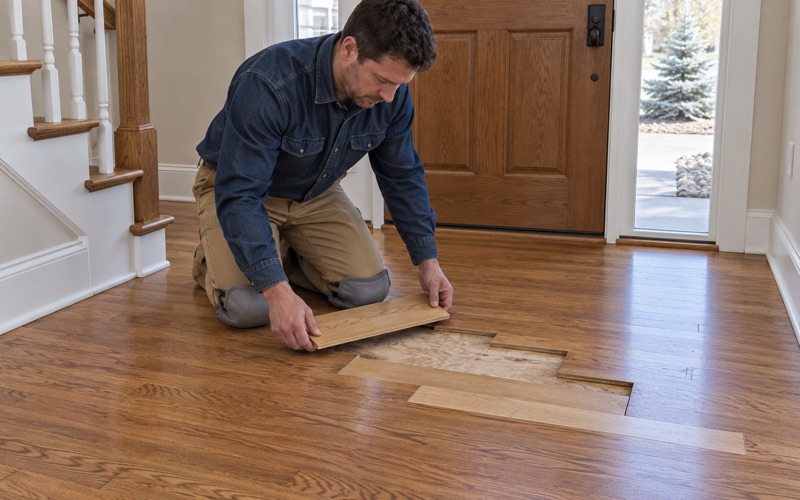
Worker lowering a replacement oak board into a staggered lace-in repair in the entry floor of a Broomfield house.

Hardwood Floor Repair

Squeaks, popping boards, cracks, gouges and damaged boards fixed at the source, with replacement boards woven in to match the floor around them.

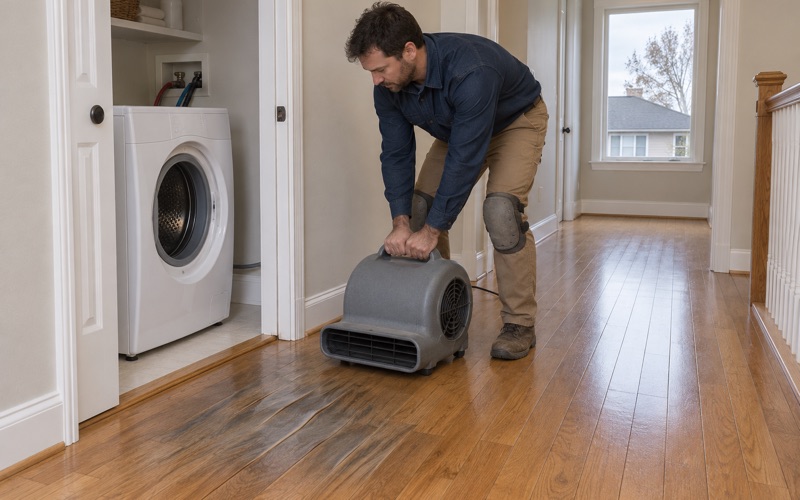
Worker positioning an air mover over cupped oak boards beside a laundry closet after a supply-line leak in a Broomfield house.

Hardwood Floor Water Damage

Wet hardwood traced, dried and measured before any board comes out, with room-by-room readings and photos ready for your insurance adjuster.

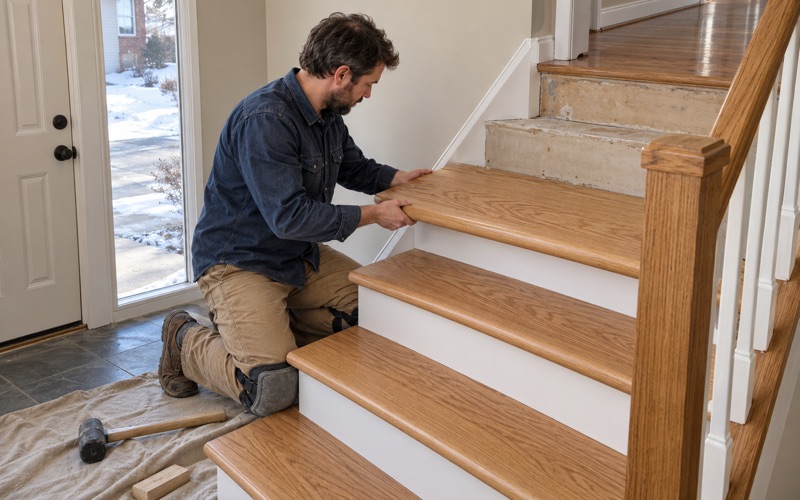
Worker setting a new oak tread with a rounded nose on the half-flight stair of a bi-level house in Broomfield.

Hardwood Stairs

Carpeted stairs converted to wood, worn treads refinished and landings matched to new floors, with every riser checked so the steps stay even.

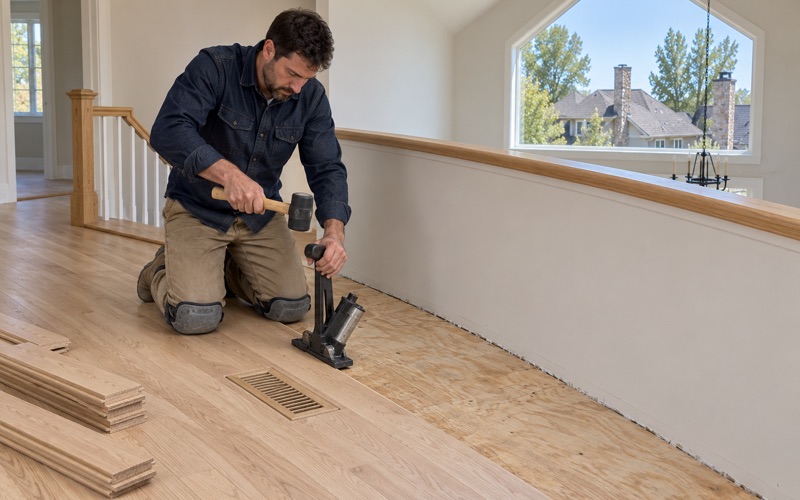
Worker nailing solid oak around a flush floor register in the upstairs loft of a new Broomfield house.

Hardwood Floor Installation

Solid and engineered hardwood installed over a flat, fastened subfloor, acclimated to your rooms and finished with clean transitions at every edge.

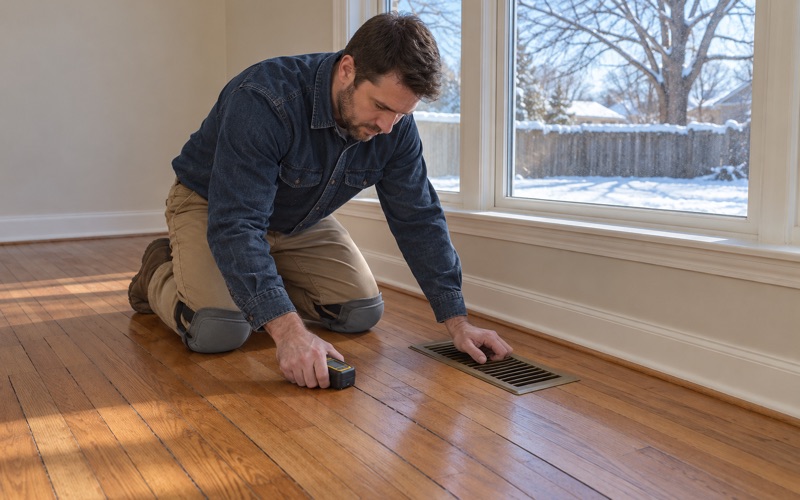
Worker pressing a moisture meter onto oak boards with winter gaps beside a floor register in a heated Broomfield house.

Hardwood Floor Gaps

Winter gaps read against the season they opened in, with moisture readings deciding between waiting, humidity control, slivers or new boards.

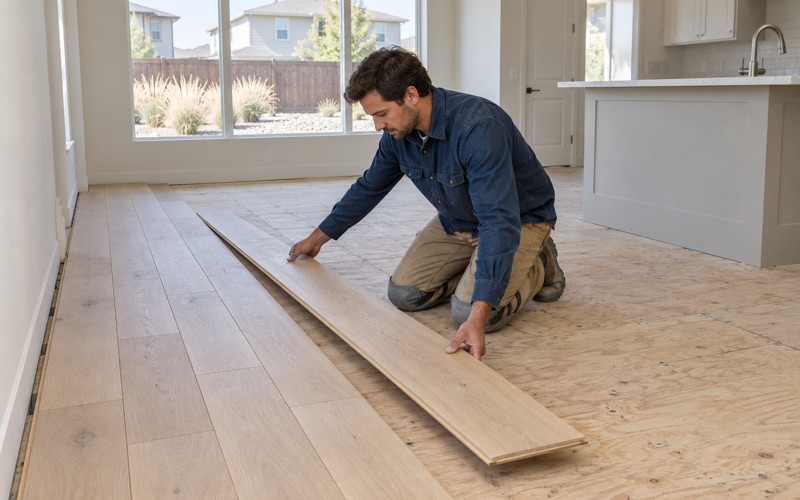
Worker laying out a dry row of wide white oak planks on a plywood subfloor in the great room of a Broomfield house.

Wide Plank Hardwood Flooring

Wide white oak and other species in solid or engineered planks, chosen and fastened for a dry Colorado house so the boards stay flat and tight.

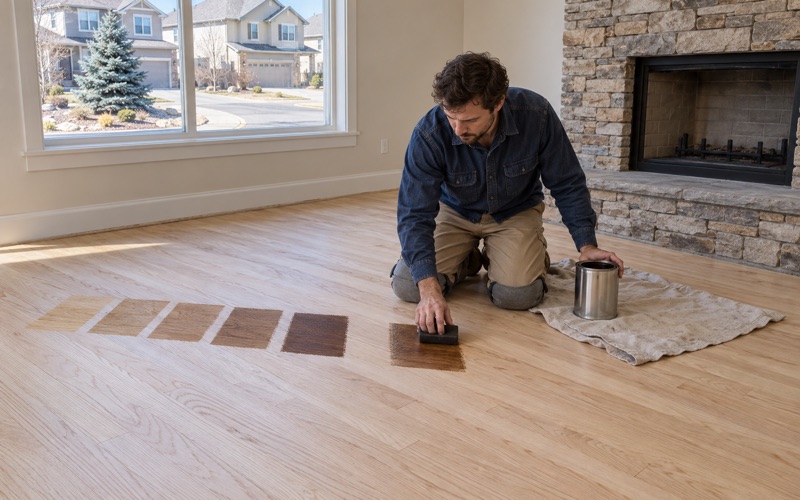
Worker wiping stain samples onto sanded oak so the owner can compare colors in their own light in a Broomfield home.

Hardwood Floor Staining

Stain color chosen from samples on your own sanded floor, then applied evenly over a careful grit sequence and sealed under the right finish.

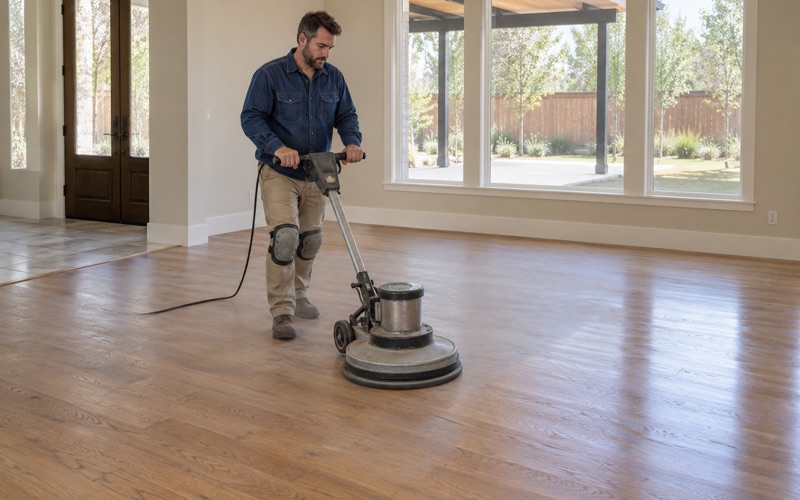
Worker running a floor buffer with a screen pad across a sound oak floor before a fresh coat of finish in a Broomfield home.

Screen And Recoat Hardwood Floors

A light abrasion and a fresh coat of finish for floors worn only in the finish, with an adhesion test first so the new coat bonds properly.

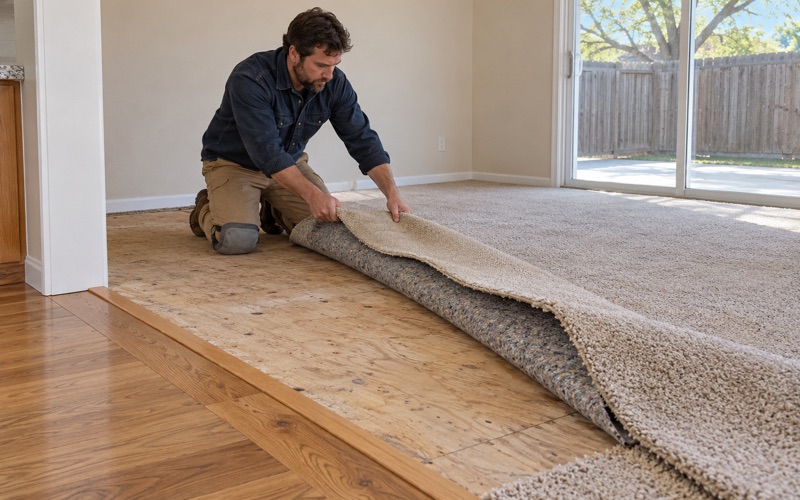
Worker peeling a cut strip of carpet back from a family room where new oak already covers the kitchen floor in a Broomfield house.

Replace Carpet With Hardwood

Carpet pulled, the subfloor checked and repaired, and solid or engineered hardwood laid through the rooms, stairs and landings you choose.

Two Decades Working On Wood Floors

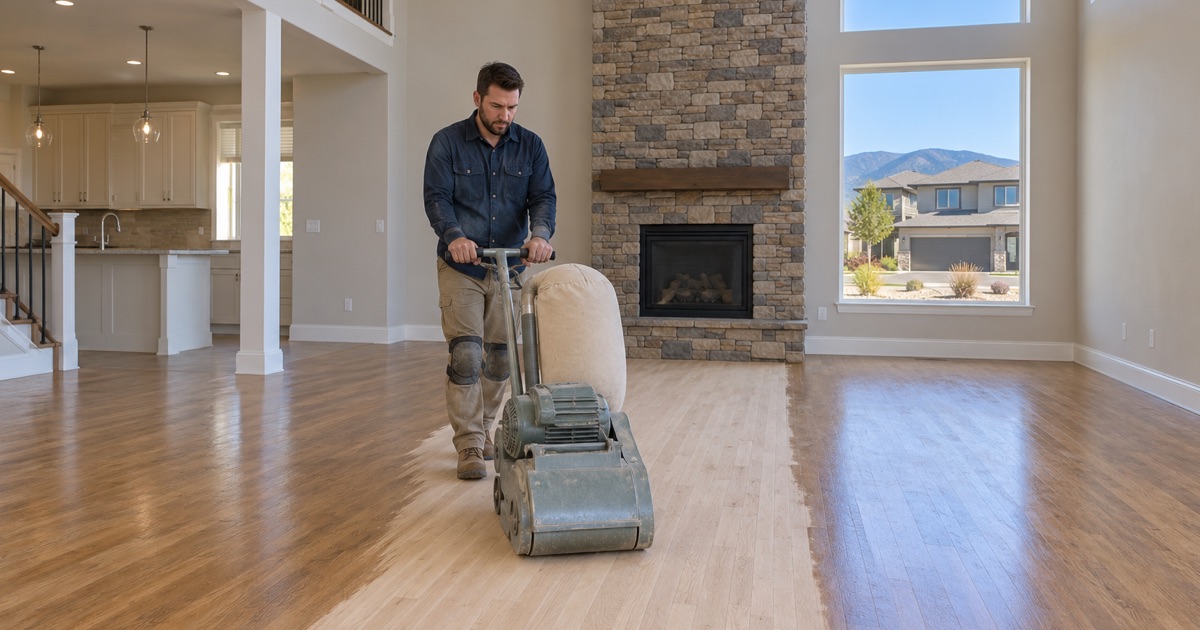
Worker guiding a drum sander along red oak flooring in the two-story great room of a 2000s house in Broomfield.

More Than 20 Years Of Hardwood Floor Work

Broomfield Wood Flooring has worked on wood floors for more than 20 years. That time has gone into sanding, repairing and installing floors, and it is why we read a floor’s history, its moisture and its construction before we put a number on a quote.

Why Choose Broomfield Wood Flooring

Moisture Readings Before Any Filler

Every winter gap gets a moisture meter reading measured against the furnace season it opened in, so a seam that will close again by summer is left alone rather than packed with filler that cracks out or pushes the boards up once the wood swells back.

Humidity Planned Before Installation

No new wood floor goes down before we talk through the humidity in your house, because a heated Front Range home in winter runs far drier than the boards were when they shipped, so the floor is acclimated to your rooms rather than laid tight and left to shrink apart by February.

Basement Floors Identified First

Never assuming a basement is a simple slab, we confirm whether yours is slab on grade, a structural wood floor or a structural concrete floor, so engineered wood goes where solid wood does not belong below grade rather than one product being forced onto a floor it was never meant for.

Water Damage Documented Room By Room

Whether the water came from a burst pipe, a washer, a supply line or the roof, it is traced, dried and measured with dated readings in every room for your adjuster, so the claim rests on evidence rather than on a floor that was torn out before anyone measured it.

Refinishing Oak Instead Of Replacing It

More than half of Broomfield’s homes were built in 2000 or later, and the site-finished oak in those houses gets the wood above the tongue checked before anyone mentions replacement, so a floor with sanding life left is refinished rather than ripped out and hauled away.

Stain Chosen On Your Own Boards

Only samples laid on your own floor, in your own light, decide a color, so the stain you approve is the stain you live with rather than a showroom chip that looked warm under store lighting and reads orange at home.

Something Is Wrong With My Floor

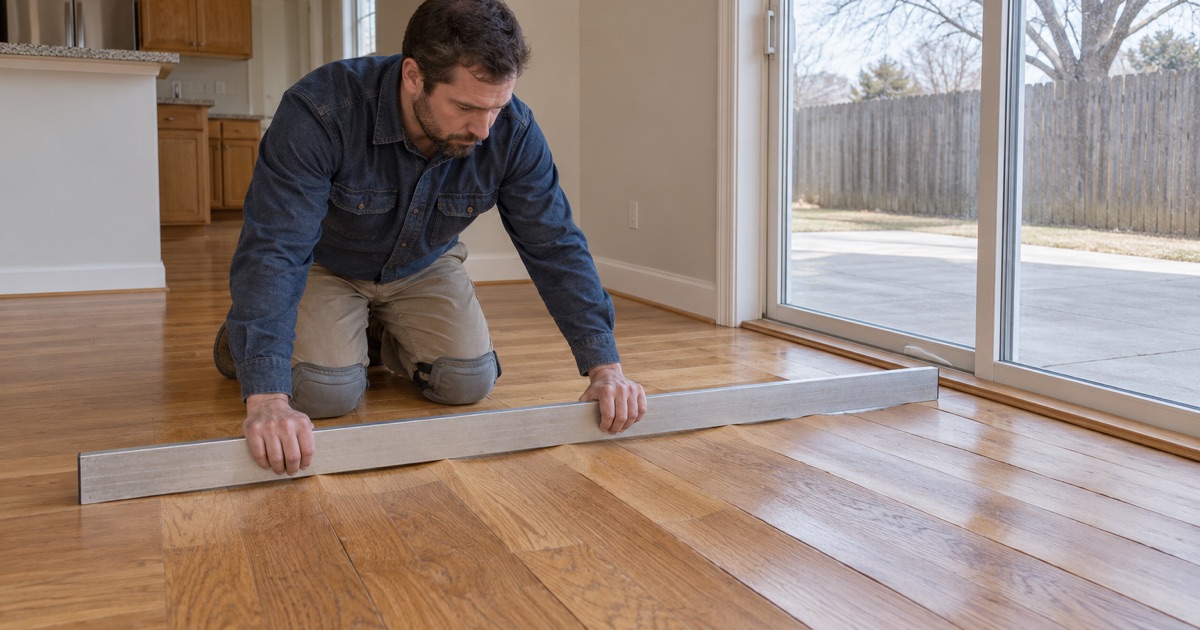
Worker laying a long straightedge across cupped oak boards to show the dip between their edges in a Broomfield kitchen.

Seasonal Gaps Between Hardwood Boards

Board gapping that opens every furnace season is usually shrinkage, not failure: heated winter air draws moisture out of the wood and each board narrows slightly. We take moisture readings and compare them with the floor’s summer condition, so you know whether the seasonal gaps will close on their own or point to something else.

Cracking, Checking And Veneer Cracks

Checking is the fine splitting that runs along the grain on a board’s face, and on engineered floors it can appear as veneer cracking in the top layer. We look at how widespread it is and what your indoor relative humidity runs in winter, because the fix for dry-air cracking starts with the air rather than with filler.

Squeaks And Popping Boards

A squeak is two things rubbing: a board against a fastener, a board against its neighbor, or the subfloor against a joist. We trace squeaks and popping boards to the layer they come from before fixing them, since a loose subfloor calls for a different repair than a board that has lost its flooring cleats.

Cupped And Buckled Floors After A Leak

Cupping, where board edges sit higher than the centers, means the underside took on more moisture than the face, and buckling, where boards lift off the subfloor, is the same problem further along. We measure the wood and the subfloor before sanding anything, since a cupped floor sanded while wet will crown as it dries and leave the finish thin.

Burst Pipe, Washer And Supply Line Water

Water from a burst pipe, a washing machine or a supply line under a sink spreads under the floor farther than it shows on top. We trace the source, confirm it has stopped, and map the wet area with a moisture meter so drying reaches every affected board rather than only the obvious puddle.

Heaving Or Movement In A Basement Floor

A basement floor that rises, cracks or shifts can be responding to expansive soils beneath the slab, which swell as they take on water. We identify how your basement floor is built before recommending any wood over it, because a floating floor over a moving slab needs a different plan than wood over a structural floor.

Smoke, Soot And Ash On Wood Floors

Homes that stood through a wildfire such as the Marshall Fire can carry smoke residue, soot and ash in the grain, grooves and seams of their floors. A screen and recoat alone can seal that residue under fresh finish, so we inspect closely and decide between cleaning and a full sanding before anyone assumes the floor must be replaced.

Pet Urine Stains That Turned Black

Pet urine left on a floor soaks past the finish into the wood, and over time oak’s tannins react and turn the mark dark or black. Light pet urine stains sometimes sand out, while deep black ones usually need board replacement, so we test the area before promising either result.

Scratches, Dents And Worn Traffic Lanes

Traffic lanes form where people walk most, from the entry to the kitchen, as the finish wears through and grit scratches the wood below. Scratches confined to the finish can often be handled with a screen and recoat, while dents and wear into bare wood need a full sanding, and we tell you which you have.

Orange Or Yellow Red Oak

Red oak under an oil-modified polyurethane ambers as it ages, and that orange oak look is one of the most common reasons homeowners ask us to refinish. Sanding to bare wood and switching to a waterborne polyurethane or a different stain resets the color, and we show you the options on your own floor first.

Refinishing The Floor You Already Have

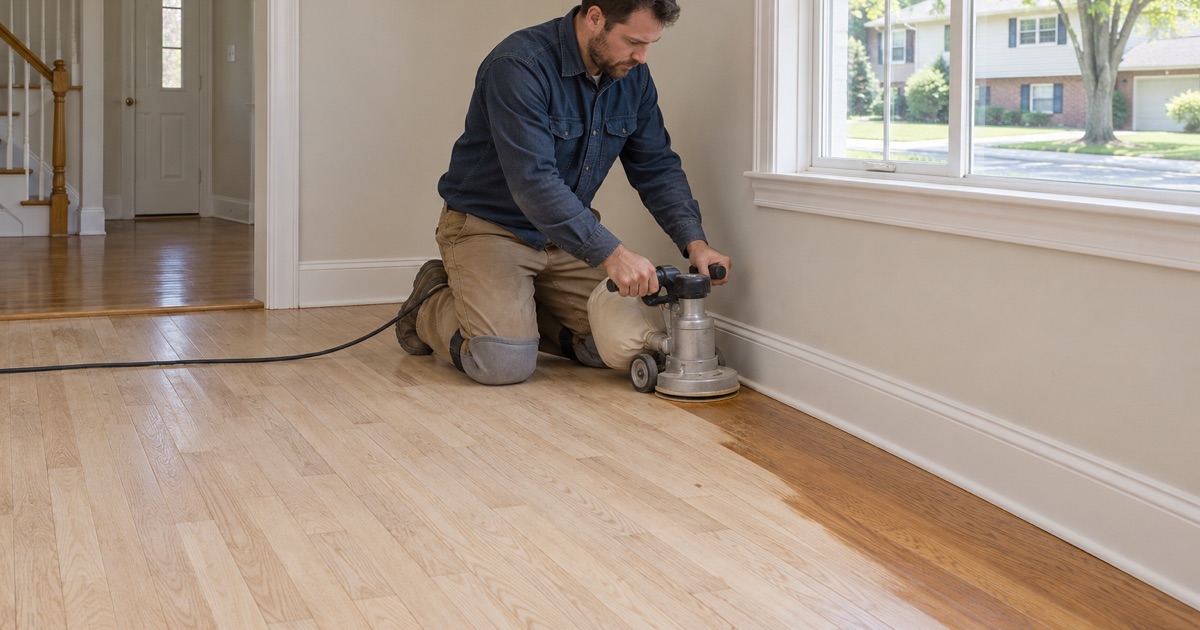
Worker running an edger along the baseboard where orange-toned oak is being sanded back to natural color in a Broomfield home.

Full Sanding Or A Screen And Recoat

A screen and recoat lightly abrades the existing finish and adds a fresh coat, which works when wear stays in the finish. A full sanding with a drum sander and an orbital sander takes the floor to bare wood through a grit sequence, which a stain change, deep scratches or graying wood all require, and we confirm which your floor needs before quoting.

Changing The Stain On 1990s And 2000s Oak

Many oak floors from the 1990s and 2000s were finished in a golden or honey tone that no longer suits the house around them. Changing it means sanding to bare wood, water popping when a darker color needs even absorption, and fresh stain samples laid on your floor so you choose in your own light.

Why Hardwood Stain Goes Blotchy

Blotchy stain usually traces back to uneven sanding, swirl marks left by an orbital sander, or a species such as maple that absorbs stain unevenly by nature. We control the grit sequence and test on your boards first, and on maple we will say plainly when a natural finish will look better than any stain.

Matching Replacement Boards To An Old Floor

New boards rarely match an old floor straight from the box, because the existing wood has aged under its finish for years. We weave replacement boards into the existing field, then sand and finish the whole room or a whole section together so the color reads as one floor rather than a patch.

Refinishing Hardwood Stairs Tread By Tread

Stairs are sanded largely by hand and with detail tools, because a drum sander cannot reach the edges of a stair tread or around the stair nosing. We quote stair treads and stair risers one at a time, which keeps the price honest when a staircase has a few damaged treads and many sound ones.

Hardwood Found Under Carpet In A Ranch Or Bi-Level

Older ranch and bi-level houses sometimes hide hardwood under the carpet, marked by staples and tack strip holes along the walls. We lift a corner, check the thickness left above the tongue, and tell you whether the floor can be sanded and refinished before the rest of the carpet comes up.

Dustless Sanding While You Stay Home

Dustless sanding connects the sanders to a vacuum system that captures most dust at the source, which is what makes staying in the house during a refinish practical. We plan the rooms in sequence so you keep a kitchen and a path through the house while each area is sanded, finished and cured.

Refinishing Floors Before A House Goes On The Market

Refinished floors are one of the most visible changes a seller can make before listing a house. We schedule the work so the finish has cured before the listing photos are taken, and we will tell you when a screen and recoat gives enough lift without the extra days of a full sanding.

Choosing A Floor Finish And Sheen

Waterborne polyurethane dries clear and fast with little odor, oil-modified polyurethane adds warmth as it ambers, and hardwax oil soaks in for a low-sheen look that can be repaired in spots. Colorado Regulation Number 21 and the federal rule at 40 CFR 59 Subpart D both limit VOC content in these coatings, and within those limits we help you settle the sheen level from matte to gloss.

Putting In New Wood Floors

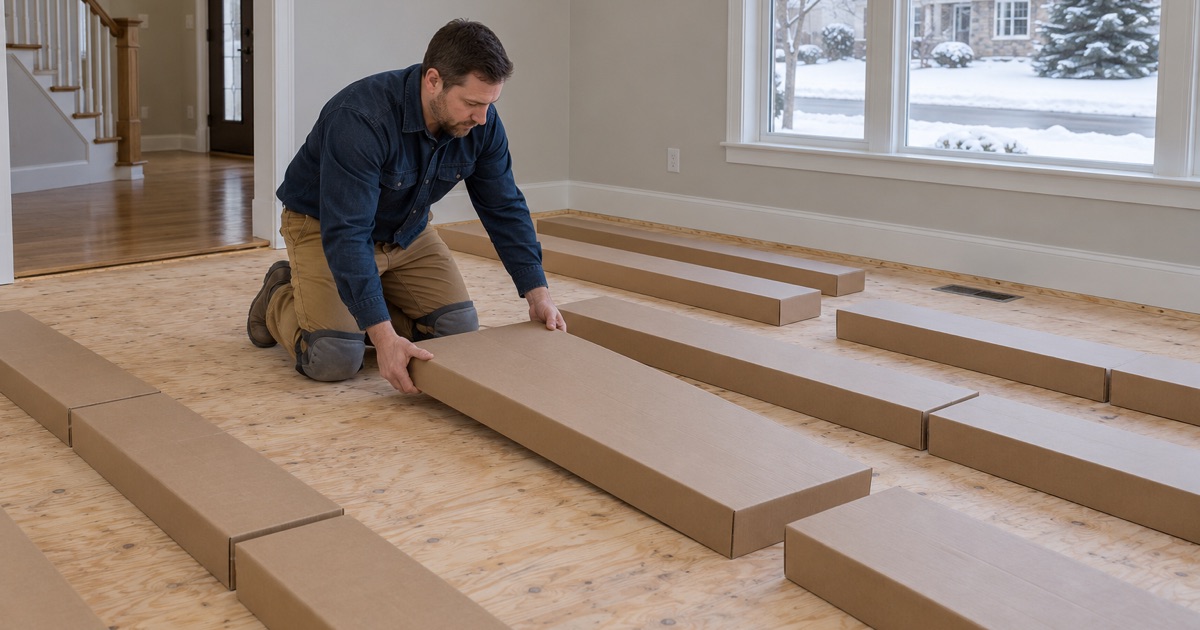
Worker setting cartons of new oak flooring flat to acclimate in the empty living room of a Broomfield house in winter.

Replacing Carpet With Hardwood

Replacing carpet with hardwood can mean one bedroom or an entire upstairs. We pull the carpet, carpet pad and tack strip, fasten or repair the subfloor, and plan a reducer wherever the new floor meets tile or vinyl so no edge becomes a trip point. Broomfield began as a master-planned community, and in master-planned homes we often take on stairs and landings in the same project.

Carpeted Stairs Converted To Wood Treads And Risers

Converting carpeted stairs means removing the carpet, cutting back the bullnose and installing new stair treads, stair risers and stair nosing. We check each step’s rise as we go, since new treads change the height of the top and bottom steps if nothing else is adjusted to compensate.

Split-Level Stairs, Landings And Even Riser Heights

Split-level and bi-level homes have short runs of stairs with landings between floors. A new floor on a landing raises that surface, so we measure the riser height above and below it before installing, keeping every step even instead of leaving one taller step that catches a toe.

Solid Hardwood, Engineered Wood And Vinyl Plank Compared

Solid hardwood can be sanded many times, engineered wood puts a real engineered wear layer over a stable core, and luxury vinyl plank is not wood at all but tolerates standing water better. We lay out those tradeoffs honestly, including rooms where vinyl plank is the better answer, so you choose for the room rather than for a sales pitch.

Engineered Wood In A Finished Basement

Below grade, solid wood is usually the wrong product because it moves too much with basement moisture. Engineered wood, installed as a floating floor or a glue-down engineered floor over the right vapor retarder, gives a finished basement real wood without that risk, and we test the concrete for moisture before recommending it.

Slab, Structural Wood And Structural Concrete Basements

Basement floors here are commonly one of three types: a slab on grade resting on soil, a structural wood floor framed over a crawl space, or a structural concrete floor spanning over one. Each takes flooring differently, so we identify which you have before recommending a product or a fastening method.

Acclimating Hardwood To A Dry Front Range House

Wood arrives at a moisture level set by where it was milled and stored, and a heated Colorado house is often far drier. We let boards acclimate on site and measure them against your rooms until they approach the equilibrium moisture content the floor will live at, following the NWFA Installation Guidelines.

Prefinished Versus Site-Finished Hardwood

Prefinished boards arrive sanded and coated, so installation is faster and there is no finishing odor in the house. Site-finished floors are sanded and coated in place, which gives a flat, sealed surface without beveled edges and lets you choose any stain, and we explain how each wears and refinishes over the years.

White Oak And Wide Plank Hardwood

White oak rates harder than red oak on the Janka hardness scale and takes stain evenly, which is why it anchors so many wide plank floors. Wide boards move more with humidity than narrow strips, so on a wide plank floor we pay closer attention to acclimation, fastening and the expansion gap at every wall.

Herringbone, Chevron And Parquet Patterns

Herringbone and chevron floors are built from short pieces set at angles, so the layout decides how the pattern lands at doorways and walls. We set the centerline and borders before the first piece goes down, and we can pair a pattern with parquet or straight boards in adjoining rooms.

Claims, HOAs, Rentals And Older Homes

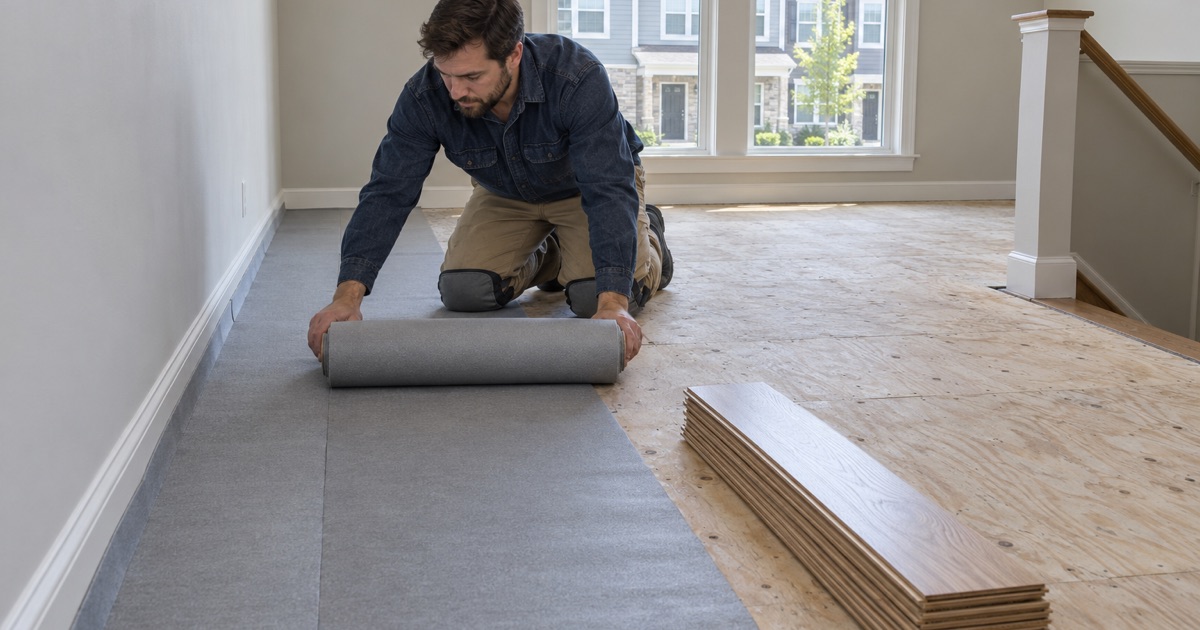
Worker unrolling underlayment across the plywood subfloor of a Broomfield townhome before new hardwood goes down.

What A Homeowners Policy Usually Covers For Water-Damaged Hardwood

Policies differ, and sudden water damage such as a burst pipe is often handled differently from a slow leak or outside flooding. We do not decide coverage; we give your adjuster room-by-room moisture readings, photographs and a repair scope, so the decision rests on the floor’s actual condition.

Rebuilding Floors After The Marshall Fire

The Marshall Fire of December 30, 2021 left many families rebuilding and many more living in standing homes with smoke and ash inside. Flooring is part of the dwelling rather than contents, which matters when a claim is divided between the two, and we price flooring line by line so owners can compare what a policy pays with what the rebuild needs.

HOA And Metro District Rules For Floor Work

If your home sits under an HOA, a metro district or both, any rule about interior flooring comes from your own governing documents. The Colorado Common Interest Ownership Act governs how associations operate but does not write a flooring rule of its own, so we read your documents with you before work starts.

Underlayment For Townhomes And Condominiums

Broomfield counts 2,415 one-unit attached homes in Census data, and in attached homes and condominiums the floor you walk on can sit above or beside a neighbor. Association documents often say something about underlayment for that reason, so we read the requirement and choose an underlayment and installation method that meets it.

Move-Out Floor Damage Versus Normal Wear On A Rental

Under C.R.S. 38-12-103, a Colorado landlord cannot keep a security deposit for normal wear and tear and must give a written statement of the exact reasons for any amount withheld. We write floor estimates for landlords and tenants that separate wear, like faded traffic lanes, from damage such as deep pet urine stains.

Lead Paint Checks Before Sanding A Pre-1978 Home

The EPA RRP Rule covers renovation that disturbs painted surfaces in housing built before 1978, and 20.9 percent of Broomfield’s housing predates 1980. Before we sand near painted baseboards, stair risers or trim in an older house, we confirm the build year and plan the work around the painted surfaces we will disturb.

Old Floor Tile And Black Mastic Under The Carpet

Pulling carpet in an older house sometimes uncovers square resilient floor tile or black mastic adhesive, either of which may contain asbestos. Colorado Regulation Number 8 treats intact resilient floor tile as nonfriable unless it is damaged and does not allow sanding or grinding it, so we stop and arrange testing rather than sanding through it.

Holding Indoor Humidity Where Wood Floors Stay Flat

Wood flooring manufacturers and the NWFA publish relative humidity ranges for their products, and a dry Colorado winter often pulls a house below them. A whole-house humidifier on the furnace can hold indoor air closer to that range, and we will tell you when one is worth the cost for your floor and when it is not.

Areas We Serve

Broomfield Wood Flooring provides wood-flooring throughout the greater Broomfield area, with the same crews and the same standards on every job.

Good to know

Frequently Asked Questions

How much does it cost to refinish hardwood floors in Broomfield?

The price depends on square footage, the floor's condition, stairs and the finish you choose. One cost aggregator puts Broomfield refinishing at about $2.70 to $3 per square foot, with whole jobs from $600 to $5,000, and contractor quotes often land above that range. We measure and inspect the floor, then give you a written quote that breaks out rooms, stairs and any board replacement.

How long does a hardwood refinishing job take?

Most refinishing work runs several days: sanding through the grit sequence, staining if you choose a color, and several coats of finish with drying time between them. Waterborne polyurethane dries faster than oil-modified polyurethane, which can shorten the schedule. Furniture can come back once the finish has cured enough to carry it, and rugs should wait longer than that.

Can engineered hardwood be sanded and refinished?

Often, yes, but it depends on the thickness of the engineered wear layer. A thick wear layer can take one or more full sandings, while a thin one may only tolerate a screen and recoat. We check the wear layer at a vent or an edge before recommending anything, so a refinish never sands through to the core.

Should I choose solid or engineered hardwood?

Solid hardwood suits most rooms above grade and can be sanded many times over its life. Engineered wood is more dimensionally stable, which makes it the better choice below grade, over a concrete slab, and in rooms where humidity swings widely. We recommend by room rather than by house, so one project can use both.

Will you document water damage for my insurance adjuster?

Yes. We trace the source of the water, take dated moisture meter readings in every affected room, photograph the damage and write a repair scope that separates boards that can be dried and refinished from boards that need replacement. Your insurer decides coverage; our records make sure that decision is based on the floor's real condition.

Can my floor get a screen and recoat instead of a full sanding?

If the wear is only in the finish, with no bare wood, deep scratches or graying showing, a screen and recoat can restore the sheen at a fraction of the work. It cannot change the stain color or remove damage in the wood itself. We test adhesion first, since a floor that has been waxed or treated with some cleaners will not bond with a new coat.

Which wood floors hold up best with dogs and children?

Species with higher Janka hardness, such as hickory and white oak, resist dents better than softer woods. Finish choice matters as much as species: a matte or satin sheen level hides fine scratches that a gloss finish shows, and a hardwax oil can be repaired in one spot. We talk through how the room is actually used before recommending either.

Do we have to move out while the floors are sanded?

Usually not. Dustless sanding captures most dust at the machine, and we plan the rooms in sequence so you keep a working kitchen and a path through the house. The main exceptions are finishing days with an oil-modified polyurethane, when the odor is strong enough that many families prefer to stay elsewhere for a night or two.

Should I fill the gaps that open in my floor every winter?

Not until they have been measured. Seasonal gaps from dry winter air usually close again as summer humidity returns, and filler packed into them either cracks out or pushes boards up when the wood swells. We take moisture readings in winter and compare them with the floor's summer condition before recommending filler, board replacement or humidity control.

Can hardwood be installed over a concrete slab?

Engineered wood can, either as a glue-down engineered floor or a floating floor over the right underlayment and vapor retarder. Solid wood generally should not go directly on a slab. We test the concrete for moisture first, following ASTM F2170 where a probe test is called for, because a slab that is still releasing moisture will cup any wood placed over it.

Ready to Get Started?

Request a free quote today and we'll get back to you fast.