
Broomfield Wood Flooring installs wide plank hardwood flooring in Broomfield, CO, serving surrounding cities including Lafayette, Northglenn, Louisville, Westminster and Superior. In more than 20 years of laying floors, we have seen wide boards become one of the most requested looks, and we have learned that they reward careful planning more than any other style, because every bit of seasonal movement is multiplied by the width of the board.
Wide planks show more of the grain in each board and give a room a calmer, less busy look than narrow strips. They suit open floor plans, long hallways and houses with tall ceilings, and they pair naturally with the white oak, matte finishes and light, natural tones many homeowners are choosing today. Getting them to stay flat and tight through a dry Colorado winter depends on the product, the subfloor and the installation, and we plan all three together.
What Makes A Floor Wide Plank
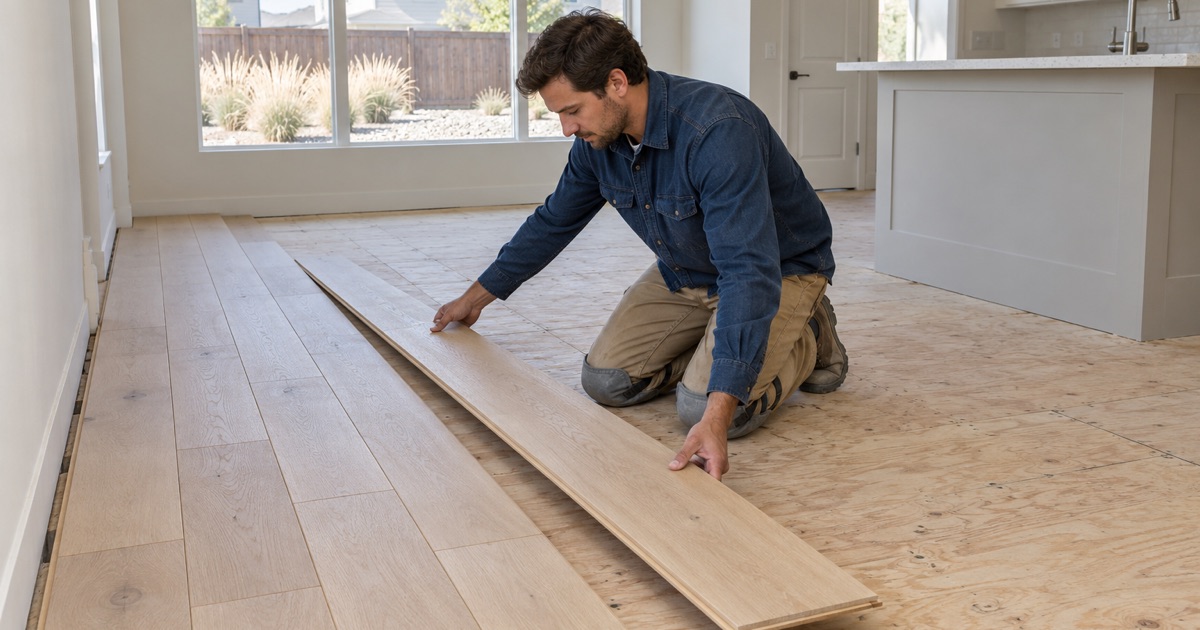
The Look Of Wider Boards
Wide plank flooring uses boards noticeably wider than the traditional strip floors found in many older homes. Fewer seams across a room let the grain and character of each board carry the look, which is why wide plank floors often read as more natural and relaxed. Longer board lengths add to the effect, and we lay out boards so short pieces do not cluster in one area.
Species For Wide Plank Floors
White oak is the most common wide plank species because it is stable for its size, rates well on the Janka hardness scale and takes stain and natural finishes evenly. Hickory adds strong color variation and extra dent resistance, and maple gives a smooth, pale surface. Red oak works in wide planks too, though its warmer tone and more open grain give a different character.
Grades And Character
The grade of the wood decides how much natural character shows. Clear and select grades have few knots and even color, while character or rustic grades include knots, mineral streaks and more variation. Wide boards show grade more than narrow ones, so we lay out boards from several cartons at once and let you see a real spread before the floor goes down.
Solid Or Engineered Wide Plank In A Dry Climate
How Solid Wide Planks Move
Solid wood shrinks and swells across its width as humidity changes, and a wide board moves more in total than a narrow one. In a heated Front Range house, where winter air can get very dry, solid wide planks will show wider seasonal gaps in winter and can cup if the subfloor below them is damp. None of that rules them out, but it makes installation and humidity control more important.
Why Engineered Wide Planks Stay Flatter
Engineered wide plank puts a layer of real hardwood over a cross-layered core that resists movement in every direction. That construction lets wide boards stay flatter and tighter through the seasons, and it lets them go over concrete and below grade where solid wood cannot. For the widest boards in a dry climate, engineered is often the better long-term choice.
Thickness And The Wear Layer
With engineered wide plank, the engineered wear layer sets how many times the floor can be sanded in the future. A thicker wear layer costs more but gives the floor a longer life through future refinishing. We compare wear layers side by side when you are choosing, since two planks that look the same on top can differ a great deal in how much wood sits above the core.
Installing Wide Plank Hardwood So It Stays Flat
Matching Moisture Before Installation
Wide boards are unforgiving of a moisture mismatch. We let the flooring acclimate in the rooms where it will be installed and take moisture meter readings of both the boards and the subfloor, waiting until they are close to each other and to the equilibrium moisture content the floor will live at. Installing on a delivery date rather than on the readings is how wide floors end up cupped or gapped.
Fastening Wide Boards Correctly
Solid wide planks over a wood subfloor are usually nailed on a tighter schedule than narrow strips, and many manufacturers call for adhesive in addition to fasteners to hold the wider boards flat. We follow the manufacturer’s instructions and the NWFA Installation Guidelines, and we check the subfloor for flatness first, because a dip under a wide board shows as a rocking or hollow spot.
Expansion Gap And Layout
A wide plank floor needs its full expansion gap at every wall, and in large open areas the layout has to allow for movement across the whole run. We plan board direction, starting lines and transitions before installation so the floor can move as one piece, and we stagger end joints so the pattern looks natural rather than repeating.
Finishes And Colors For Wide Plank Floors
Natural And Light Tones
Wide white oak is often finished in natural or light tones that show off the grain. A waterborne polyurethane keeps pale wood from yellowing, and a hardwax oil gives a soft, low-sheen surface that can be repaired in spots. Both suit the calm look wide plank floors are chosen for.
Matte Sheen And Wire-Brushed Texture
Matte sheen levels hide fine scratches, dust and seasonal gaps better than gloss, which makes them a practical match for wide boards. Some prefinished wide planks are wire-brushed to raise the grain slightly, adding texture that also disguises everyday wear from pets and furniture.
Stain Samples On Your Own Boards
Wide boards show color across a larger surface, so a stain that looks right on a small chip can feel heavier across a whole room. For site-finished wide plank floors, we lay stain samples on your actual boards, in your own light, so you can judge the color at full scale before the whole floor is finished.
- 20+ Years on Wood Floors
- Moisture Readings Before Repairs
- Stain Samples on Your Own Floor