
Broomfield Wood Flooring diagnoses and repairs hardwood floor gaps in Broomfield, CO, serving surrounding cities including Lafayette, Northglenn, Louisville, Westminster and Superior. After more than 20 years of watching floors move with the seasons, we read every winter gap against the furnace season it opened in and take moisture readings before anyone fills a seam that is likely to close again by summer.
Gaps between floorboards worry homeowners more than almost any other floor problem, and most of the time the worry is bigger than the problem. Wood gives up moisture to dry winter air and gains it back in summer, and a floor that opens and closes a little with the seasons is behaving as wood always has. The job is telling that apart from gaps that signal a real fault, then choosing a fix that will still be right in six months.
Why Hardwood Floors Gap In A Colorado Winter
Shrinkage Through The Furnace Season
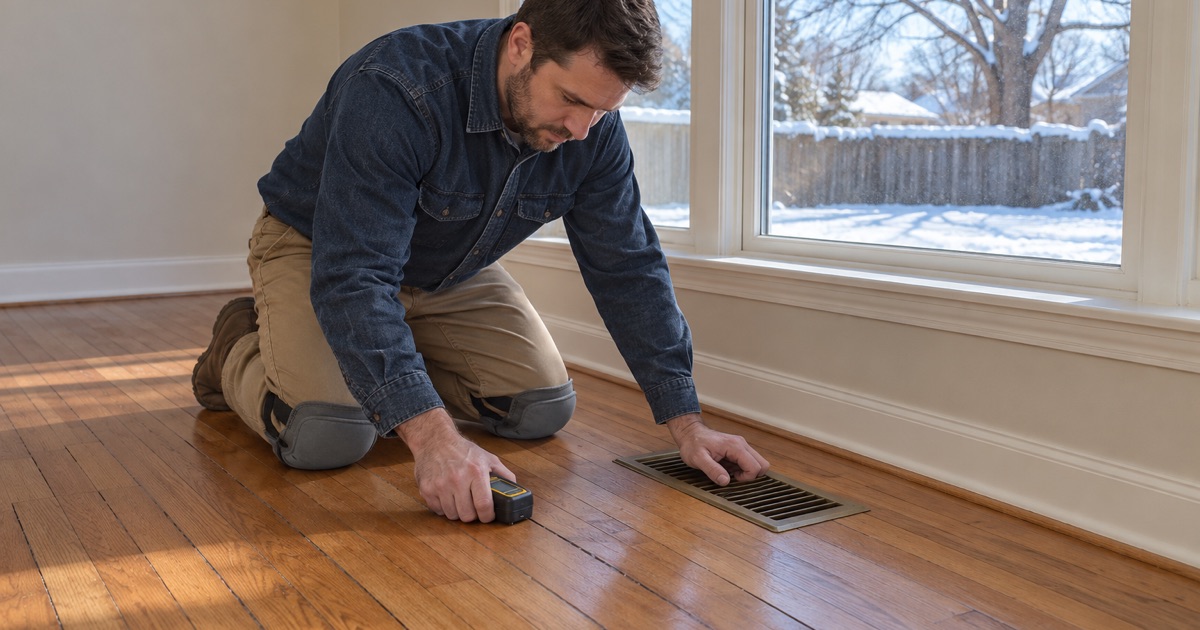
When the furnace runs, indoor relative humidity drops, and the wood in your floor slowly releases moisture until it balances with that drier air. Each board narrows slightly as it does, and across a room those small losses add up to visible seasonal gaps between boards. In spring, as the air carries more moisture again, the boards take it back and the gaps close.
This cycle is why the same floor can look perfect in August and gappy in February without anything being wrong with the installation. Measuring the floor in both seasons, or at least knowing what it looked like in summer, tells us whether a winter gap is simply the dry end of a normal range.
Why Front Range Houses Run So Dry
Broomfield sits at an elevation of about 5,348 feet, and heated winter air along the Front Range is far drier than the air most hardwood is milled and stored in. A floor installed at a warehouse moisture level, or in a house that was damp from construction, has further to shrink once the first winter arrives, which is why new floors here often show their widest gaps in their first heating season.
Which Floors Gap The Most
Wide plank floors gap more than narrow strips, because each wide board loses more total width as it dries. Site-finished floors can also show larger individual gaps where the finish has glued groups of boards together at their edges, a pattern called side bonding that concentrates the movement at fewer seams. Floors installed before the wood was properly acclimated tend to gap more than either.
Seasonal Gaps Or A Real Problem
Signs Of Normal Seasonal Movement
Seasonal gaps are fairly even across a room, appear gradually as the heating season goes on, and close again in late spring or summer. They are usually narrow and consistent with the width of the boards, and moisture meter readings show the wood at a dry but expected level for the time of year.
Gaps That Stay Open All Year
Gaps that never close point to something beyond seasonal drying. The floor may have been installed while the wood was too wet, boards may have been compressed by an earlier episode of swelling, or fasteners may have loosened and allowed boards to drift. These gaps do not fix themselves, and they are the ones that justify a repair.
Gaps In One Area Of The Floor
A cluster of wide gaps near a heat register, a sunny window or an exterior door usually traces to a local drying source rather than the whole house. Gaps along one wall can point to a floor that was pinned too tightly on the other side. We map where the gaps are before deciding on a fix, because the location often tells us the cause.
Fixing Hardwood Floor Gaps The Right Way
Measuring Before Anything Is Filled
Every gap repair starts with moisture readings in the boards and, where we can reach it, the subfloor. We compare those readings with what the wood should hold in your house at that time of year, and with the floor’s condition in the opposite season when you can tell us about it. That comparison decides whether the answer is waiting, humidity control or a repair.
Wood Slivers, Filler Or Board Replacement
Permanent gaps wider than a thin line are best filled with slivers of matching wood glued to one side of the gap, then sanded flush and finished, so the repair moves with the board it is attached to. Hairline gaps on a floor being refinished can take a trowel filler. Boards that have split, crushed at the edges or drifted badly are replaced and woven into the floor instead.
Refastening Loose Or Drifting Boards
Where boards have loosened and slid apart, we refasten them with flooring cleats or trim-head fasteners and, in some cases, close a group of boards back together before securing them. That treats the cause of the gap directly, instead of hiding a moving board behind filler that will crack out when it shifts again.
Keeping Gaps Small Next Winter
Whole-House Humidifiers
A whole-house humidifier on the furnace adds moisture to the air as it is heated, which can hold indoor relative humidity closer to the range most wood flooring manufacturers publish. Keeping the air from getting as dry keeps the boards from shrinking as far, and gaps stay smaller and more even through the season.
Watching Indoor Humidity
An inexpensive hygrometer in a main room shows how dry your house actually gets in winter. Knowing that number helps you decide whether a humidifier is worth it and gives us a better picture when you call about gaps, since we can compare your readings with the moisture levels we measure in the wood.
Planning Around Gaps When Refinishing
If gaps are part of the reason you are refinishing, timing and finish choice matter. We avoid packing seasonal gaps with filler, and where side bonding has concentrated movement at a few wide seams, we discuss finishes and techniques that reduce how much the new coat glues boards together, so the floor spreads its seasonal movement more evenly.
- 20+ Years on Wood Floors
- Moisture Readings Before Repairs
- Stain Samples on Your Own Floor